
2026 Housing Market Outlook

2026 Housing Market Outlook


After a couple of years where the housing market felt stuck in neutral, 2026 may be the year things shift back into gear. Expert forecasts show more people are expected to move – and that could open the door for you to do the same.

More Homes Will Sell

With all of the affordability challenges at play over the past few years, many would-be movers pressed pause. But that pause button isn’t going to last forever. There are always people who need to move. And experts think more of them will start to act in 2026 (see graph below):
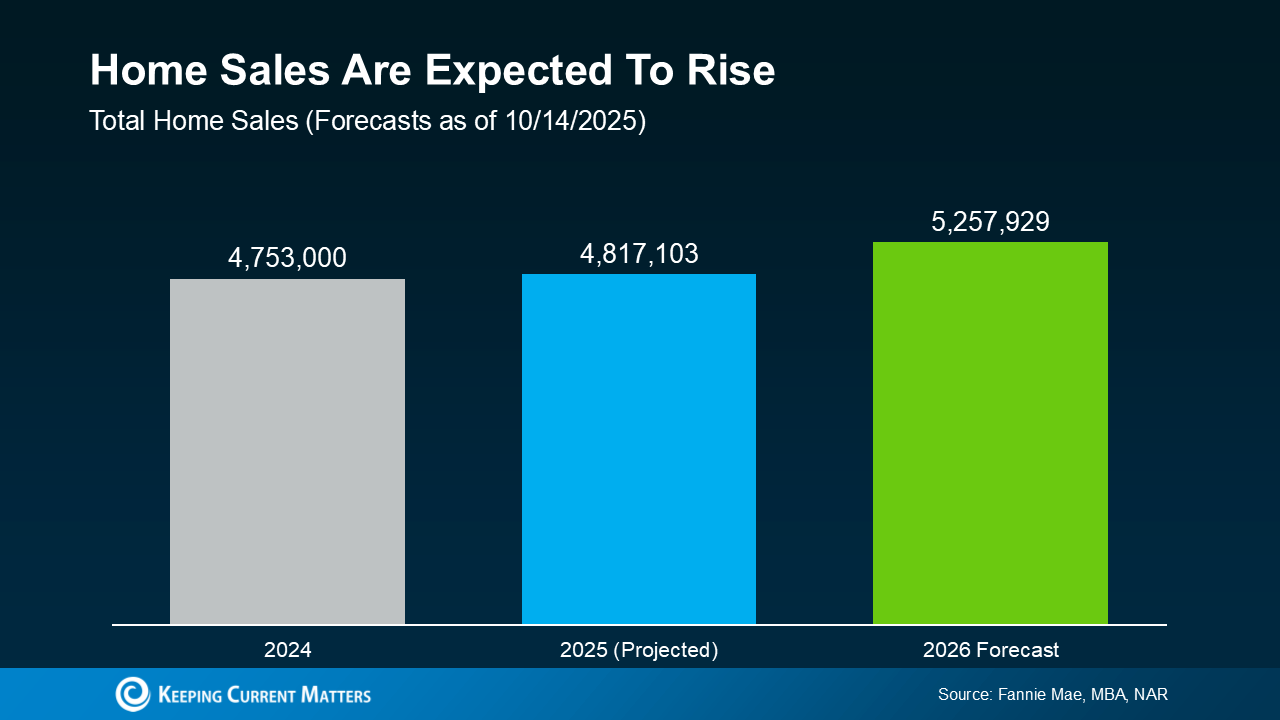
a graph of a graph showing the number of the company's salesWhat’s behind the change? Two key factors: mortgage rates and home prices. Let’s dive into the latest expert forecasts for both, so you can see why more people are expected to move next year.

Mortgage Rates Could Continue To Ease

The #1 thing just about every buyer has been looking for is lower mortgage rates. And after peaking near 7% earlier this year, rates have started to ease.

The latest forecasts show that could continue throughout 2026, but it won’t be a straight line down (see graph below):
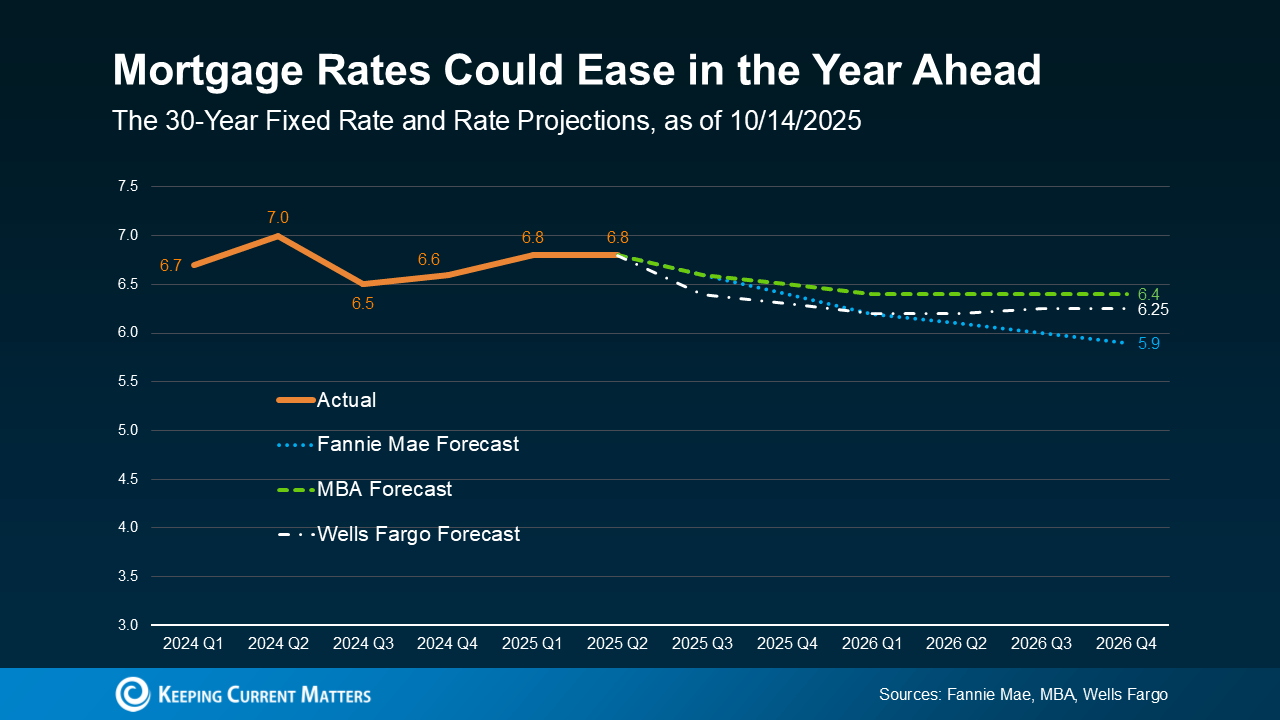
a graph with numbers and linesThere’s a saying: when rates go up, they take the escalator. But when they come down, they take the stairs. And that’s an important thing to remember. It’ll be a slow and bumpy process.

Expect modest improvement in mortgage rates over the next year but be ready for some volatility. There will be volatility along the way as new economic data comes out. Just don’t let it distract you from the bigger picture: the overall trend will be a slight decline. Forecasts say we could hit the low 6s, or maybe even the high 5s.

And remember, there doesn’t have to be a big drop for you to feel a change. Even a smaller dip helps your bottom line.

If you compare where rates are now to when they were at 7% earlier this year, you’re already saving hundreds on your future mortgage payment. And that’s a really good thing. It’s enough to make a real difference in affordability for some buyers.

Home Price Growth Will Be Moderate

What about prices? On a national scale, forecasts say they’re still going to rise, just not by a lot. With rates down from their peak earlier this year, more buyers will re-enter the market. And that increased demand will keep some upward pressure on prices nationally – and prevent prices from tumbling down.

So, even though some markets are already seeing slight price declines, you can rest easy that a big crash just isn’t in the cards. Thanks to how much prices rose over the last 5 years, even the markets seeing declines right now are still up compared to just a few years ago.

Of course, price trends will depend on where you are and what’s happening in your local market. Inventory is a big driver in why some places are going to see varying levels of appreciation going forward. But experts agree we’ll see prices grow at the national level (see graph below):
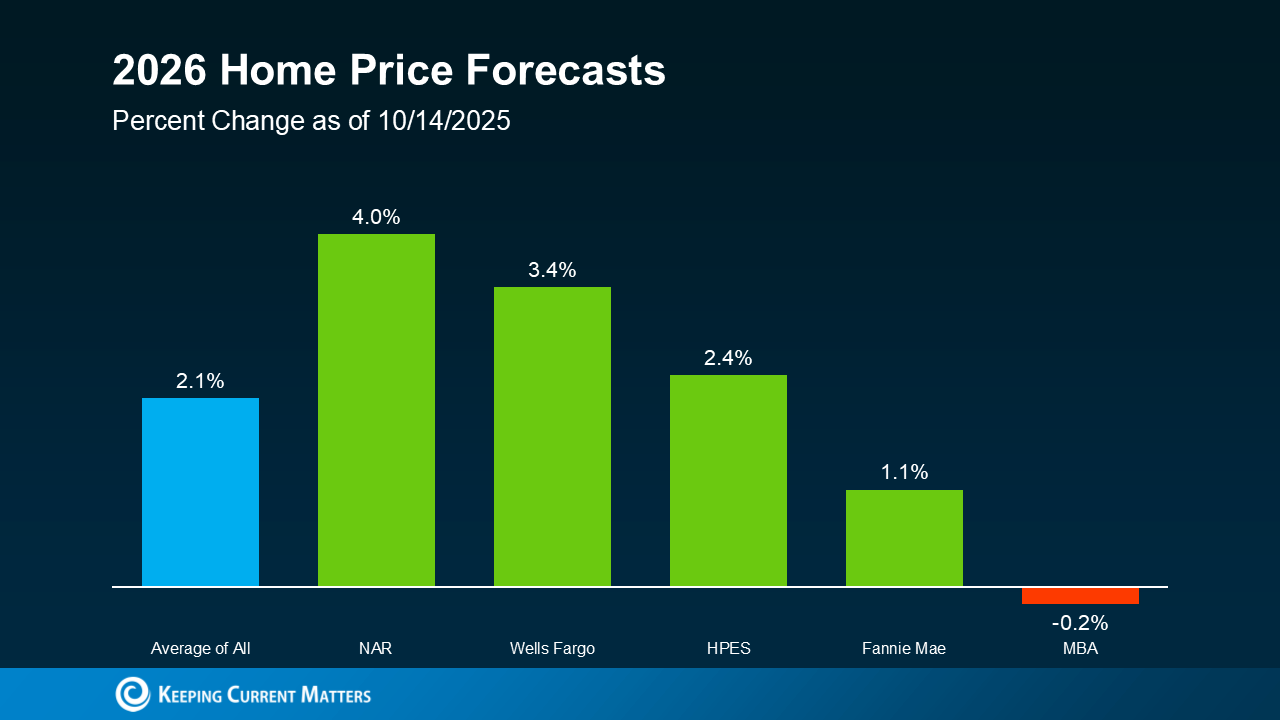
a graph of green rectangular objectsThis is yet another good sign for buyers and overall affordability. While prices will still go up nationally, it’ll be at a much more sustainable pace. And that predictability makes it easier to plan your budget. It also gives you peace of mind that prices won’t suddenly skyrocket overnight.

Bottom Line

After a quieter couple of years, 2026 is expected to bring more movement – and more opportunity. With sales projected to rise, mortgage rates trending lower, and price growth slowing down, the stage is set for a healthier, more active market.

So, the big question: will you be one of the movers making 2026 your year?

Connect with an agent if you want to get ready.

Fernanda Villarreal
Jla Realty
The Woodlands
Phone: 281-210-4140

Why You Don’t Need To Be Afraid of Today’s Mortgage Rates

Why You Don’t Need To Be Afraid of Today’s Mortgage Rates


Mortgage rates have been the monster under the bed for a while. Every time they tick up, people flinch and say, “Maybe I’ll wait.” But here’s the twist. Waiting for that perfect 5-point-something rate could end up haunting your wallet later.

The Magic Number

According to the National Association of Realtors (NAR):

“. . . a 30-year fixed rate mortgage of 6% would make the median-priced home affordable for about 5.5 million more households—including 1.6 million renters. If rates were to hit that magic number, it’s likely that about 10%—or 550,000—of those additional households would buy a home over the next 12 or 18 months.

When the market hits that mortgage rate sweet spot, as expert forecasters are starting to say is more likely in 2026, the psychological shift to lower rates will kick in for more of today’s hopeful buyers. That will unleash some pent-up demand that’s been waiting on the sidelines, and the increase in activity will cause prices to rise.

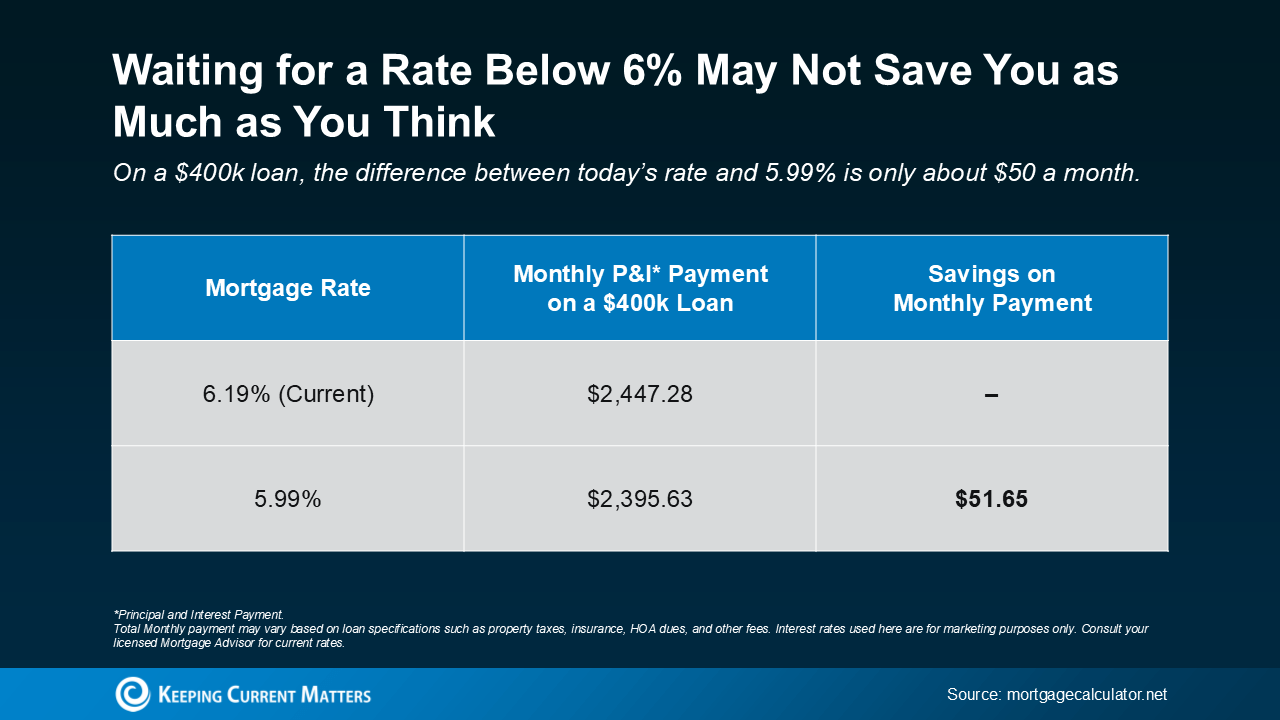
And while a 5.99% rate might sound like a big win, if you’re waiting for that number to make your move, it might not actually save you as much as you think. Here’s how the math looks when you run the numbers (see chart below):

a screenshot of a blue and white websiteOn a $400,000 mortgage, the difference between today’s rate (around 6.2%) and 5.99% is roughly $50 a month. That’s less than many people spend on weekly coffee runs or occasional DoorDash orders. And as prices tick up with more buyers in the market, that could quickly negate any of your potential savings.

So, if you’re waiting for 5.99%, that difference might not be worth missing out on today’s opportunities, like having more homes to choose from, better negotiation leverage with today’s sellers, and fewer buyers out there looking for the same houses.

Because the reality is, those benefits start to slip away when more buyers begin to make their moves – and a rate under 6% is exactly they’re waiting for.

Why Acting Now Makes Sense

Jessica Lautz, Deputy Chief Economist and VP of Research at NAR, says:

“Over the last 5 weeks, mortgage rates have averaged 6.31%. This has provided savvy buyers a sweet spot to reexamine the home search process with more inventory, widening their choices.”

And like Matt Vernon, Head of Retail Lending at Bank of America, notes:

“Rather than waiting it out for a rate that they like better, hopeful homebuyers should assess their personal financial situation—if the house is right for them, and the upfront and monthly payments are affordable, it could be the right chance to make a move.

Bottom Line

If moving at today’s rate scares you, remember, waiting doesn’t always pay off. Once rates dip below 6%, as some experts project they’ll do next year, more buyers (and higher prices) will be back.

So, don’t be afraid of today’s mortgage rates. Because if you’re ready, this might just be your chance to make a move before the market wakes up again.

Do You Know How Much Your House Is Really Worth?

Do You Know How Much Your House Is Really Worth?


Want to know something important you probably don’t have a professional check for you nearly as often as you should? Spoiler alert: it’s the value of your home.

Because here’s the reality. Your house is likely the biggest financial asset you have. And if you’ve lived in it for a few years or more, chances are it’s been quietly building wealth for you in the background – even if you haven’t been keeping tabs on it.

You might be surprised by just how much it’s grown, even as the market has shifted over the past few months.

What Is Home Equity?

That hidden wealth in your home is called equity. It’s the difference between what your house is worth today and what you still owe on your mortgage. Your equity grows over time as home values rise and as you make your monthly payments. Here’s an example to help you really understand how the math works.

Let’s say your house is now worth $500,000, and you have $200,000 left to pay off on your loan. That means you have $300,000 in equity. And that’s right in line with what the typical homeowner has right now.

According to Cotality, the average homeowner with a mortgage has about $302,000 in equity.

Why You Probably Have More Than You Think

Here are the two main reasons homeowners like you have near record amounts of equity right now:

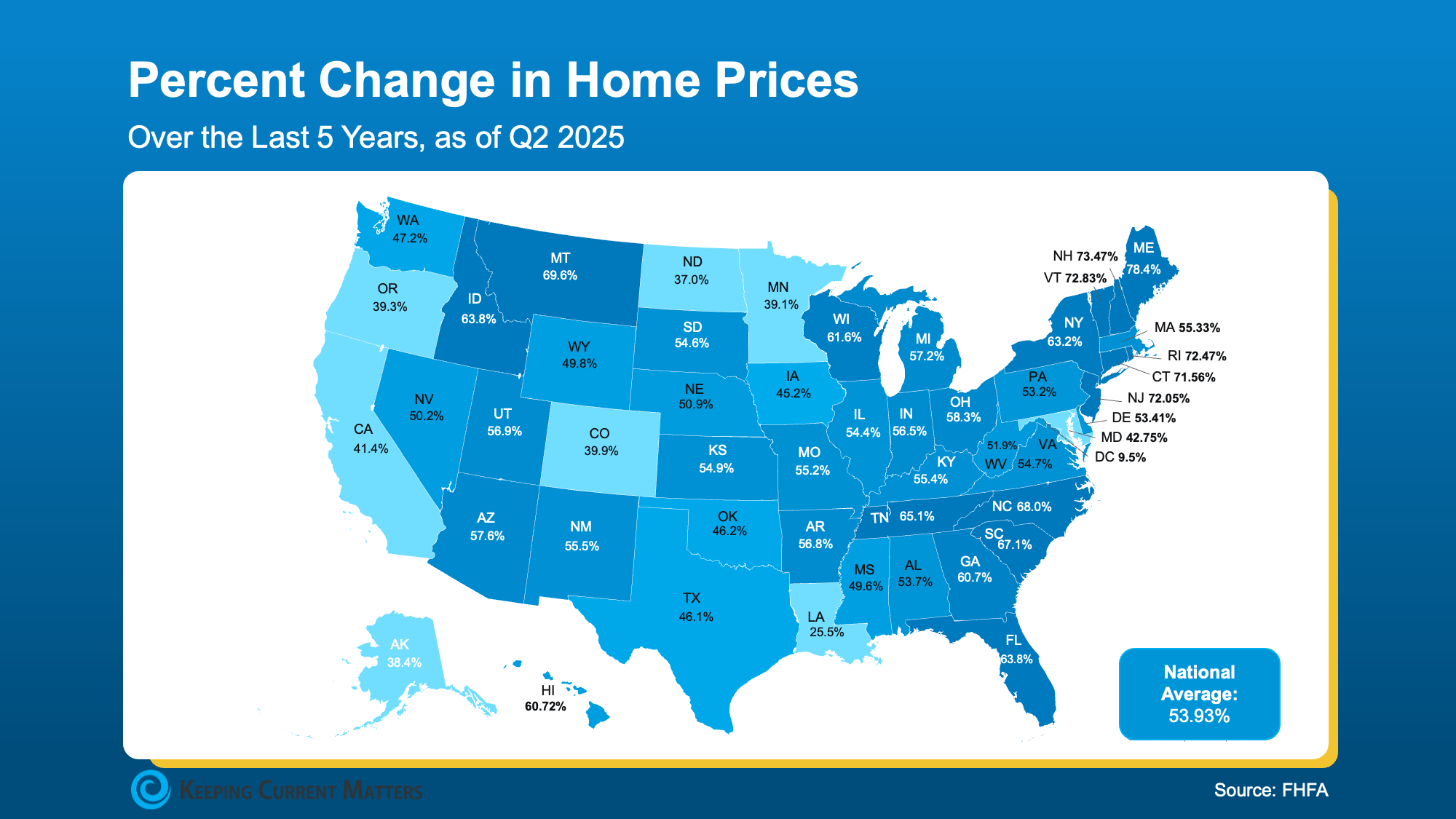
1. Significant Home Price Growth. According to the Federal Housing Finance Agency (FHFA), home prices have jumped by nearly 54% nationwide over the last five years (see map below):

a map of the united statesThis means your house is likely worth much more now than when you first bought it, thanks to how much prices have climbed over time. And if you’re worried because you’ve heard prices are flattening or even coming down in some markets, just know if you’ve been in your house for a few years (or more) you very likely have enough equity to sell and still come out ahead.

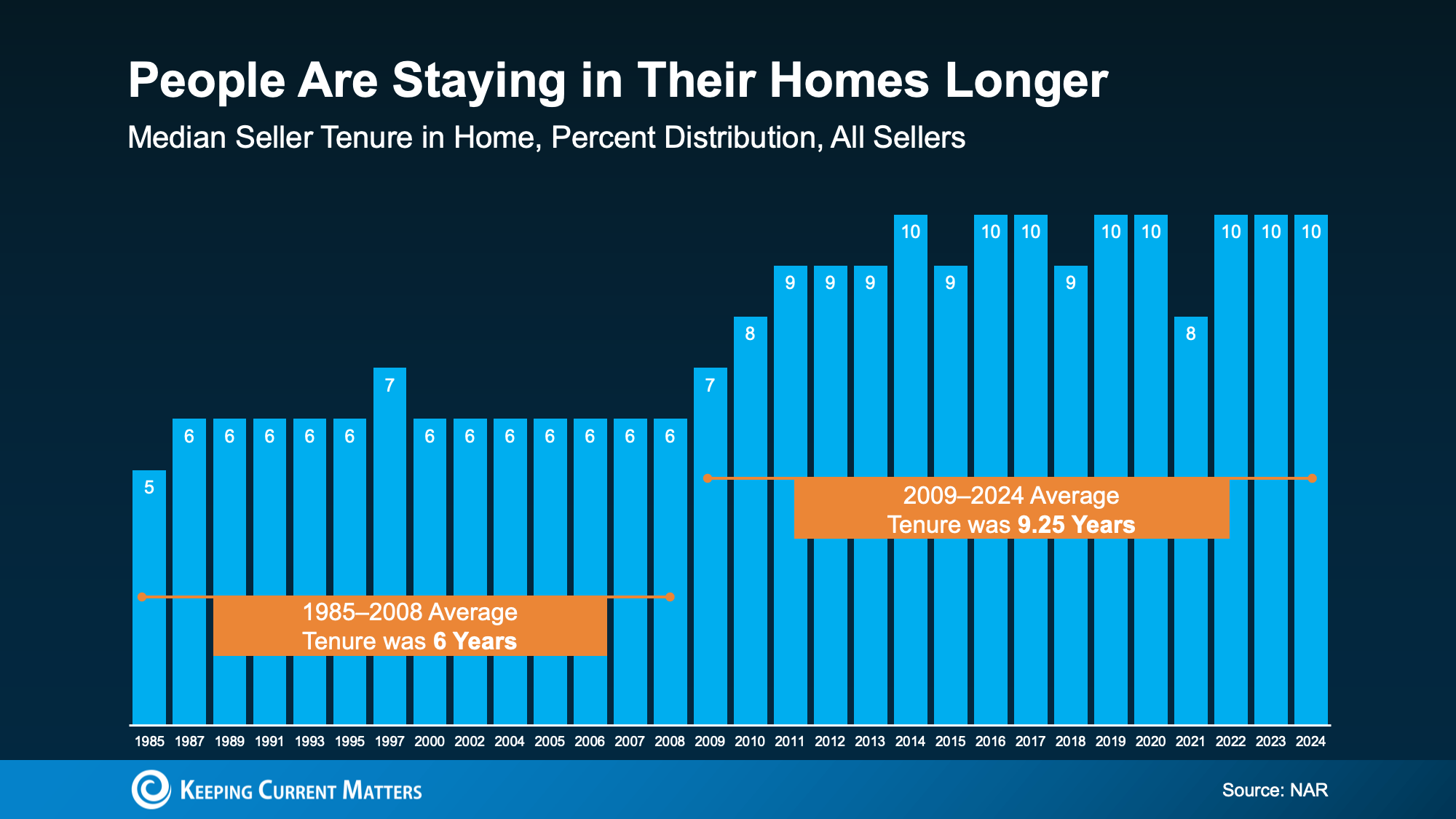
2. People Are Living in Their Homes Longer. Data from the National Association of Realtors (NAR), shows the average homeowner stays in their home for about 10 years now (see graph below):

a graph of numbers and a number of yearsThat’s longer than it used to be. And over that decade? You’ve built equity just by making your mortgage payments and riding the wave of rising home values. Because the financial side of homeownership is about playing the long game, not worrying about little ups and downs in the market here and there. And over time, that means you’re winning.

So, if you’re one of those people who’s been in their home for a bit, here’s how much the behind-the-scenes price growth has helped you out. According to NAR:

“Over the past decade, the typical homeowner has accumulated $201,600 in wealth solely from price appreciation.”

What Could You Actually Do with That Equity?

Your equity isn’t just a number. It’s a tool you can use to unlock your next big move. Depending on your goals, you could:

  • Use it to help buy your next home. Your equity could help you cover the down payment on your next home. In some cases, it might even mean you can buy your next house in all cash.
  • Renovate your current house to better suit your life now. And, if you’re strategic about your projects, they could add even more value to your home if you do sell later on.
  • Start the business you’ve always dreamed of. Your equity could be exactly what you need for startup costs, equipment, software, or marketing. And that could help increase your earning potential, so you’re getting yet another financial boost.

Bottom Line

Chances are, your house is worth quite a bit right now. If you’re curious about the value of your home, connect with a local agent to run the numbers. That way, you’ll know what you’re working with and where you can go from here.

Thinking About Renting Your House Instead of Selling? Read This First.

Thinking About Renting Your House Instead of Selling? Read This First.


If your house is on the market but you haven’t gotten any offers you’re comfortable with, you may be wondering: what do I do if it doesn’t sell? And for a growing number of homeowners, that’s turning into a new dilemma: should I just rent it instead?

There’s a term for this in the industry, and it’s called an accidental landlord. Here’s how Yahoo Finance defines it:

“These ‘accidental landlords’ are homeowners who tried to sell but couldn’t fetch the price they wanted — and instead have decided to rent out their homes until conditions improve.”

Why This Is Happening More Often Right Now

And right now, the number of homeowners turning into accidental landlords is rising. Business Insider explains why:

“While there have always been accidental landlords . . . an era of middling home sales brought on by a steep rise in borrowing rates — is minting a new wave of reluctant rental owners.”

Basically, sales have slowed down as buyers struggle with today’s affordability challenges. And that’s leaving some homeowners with listings that sit and go stale. And if they don’t want to drop their price to try to appeal to buyers, they may rent instead.

But here’s the thing you need to remember if renting your house has crossed your mind. Becoming a landlord wasn’t your original plan, and there’s probably a reason for that. It comes with a lot more responsibility (and risk) than most people expect.

So, if you find yourself toying with that option, ask yourself these questions first:

1. Does Your House Have Potential as a Profitable Rental?

Just because you can rent it doesn’t mean you should. For example:

  • Are you moving out of state? Managing maintenance from far away isn’t easy.
  • Does the home need repairs before it’s rental-ready? And do you have the time or the funds for that?
  • Is your neighborhood one that typically attracts renters, and would your house be profitable as one?

If any of those give you pause, it’s a sign selling might be the better move.

2. Are You Ready To Be a Landlord?

On paper, renting sounds like easy passive income. In reality, it often looks more like this:

  • Midnight calls about clogged toilets or broken air conditioners
  • Chasing down missed rent payments
  • Damage you’ll have to fix between tenants

As Redfin notes:

“Landlords have to fix things like broken pipes, defunct HVAC systems, and structural damage, among other essential repairs. If you don’t have a few thousand dollars on hand to take care of these repairs, you could end up in a bind.”

3. Have You Thought Through the True Costs?

According to Bankrate, here are just a few of the hidden costs that come with renting out your home:

  • A higher insurance premium (landlord insurance typically costs about 25% more)
  • Management fees (if you use a property manager, they typically charge around 10% of the rent)
  • Maintenance and advertising to find tenants
  • Gaps between tenants, where you cover the mortgage without rental income coming in

All of that adds up, fast.

While renting can be a smart move for the right person with the right house, if you’re only considering it because your listing didn’t get traction, there may be a better solution: talking to your current agent and revisiting the pricing strategy on your house first.

With their advice you can rework your strategy, relaunch at the right price, and attract real buyers to make the sale happen.

Bottom Line

Before you decide to rent your house, make sure to carefully weigh the pros and cons of becoming a landlord. For some homeowners, the hassle (and the expense) may not be worth it.

Why Now May Be a Key 2025 Moment To Sell Your House

A trusted local agent can help you assess your home’s value, fine-tune your pricing strategy, and make sure it stands out to the serious buyers who are taking action today.

Bottom Line

Buyers are watching rates, weighing their options, and starting to get off the sidelines. If you’re thinking about selling, this may be your chance to get ahead.

Want to make sure your house shows up for the right buyers, at the right time?

Connect with an agent to walk through the steps together so you can make the most of this moment.


Fernanda Villarreal
Jla Realty
Los bosques
 
Teléfono: 281-210-4140
Correo electrónico: fgalvanrealtor@gmail.com

[/vc_column_text][/vc_column][/vc_row]

Why Now May Be a Key 2025 Moment To Sell Your House

Mortgage rates are finally heading in the right direction – and buyers are starting to jump back in.

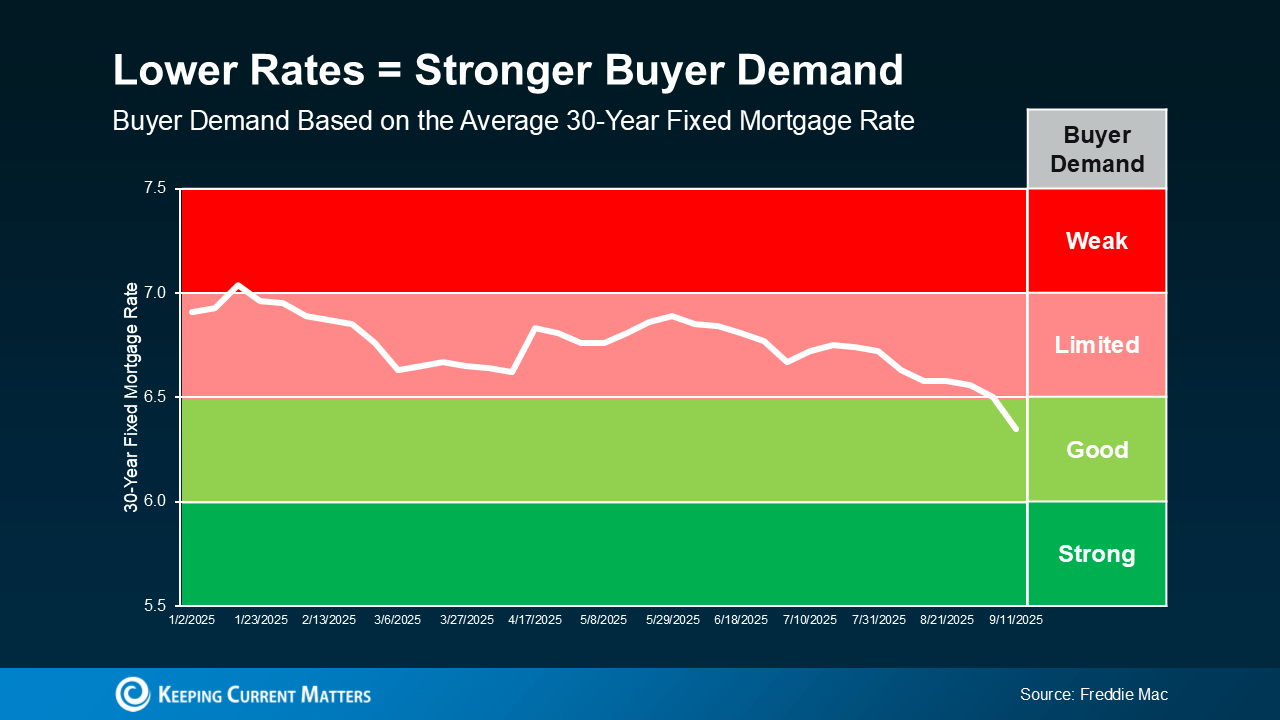
According to the data, buyer demand picked up considerably once mortgage rates hit a new low for 2025. The Mortgage Bankers Association (MBA) reports that applications for home loans were up 23% compared to the first week of September last year.

If you’ve been waiting to sell, or your listing recently expired because the market was slower than you hoped it would be, now’s the time to reconsider your move. Buyer demand is the highest it’s been since July  and you don’t want to miss this window.


When Rates Drop, Buyers React

Here’s what’s happening. The 30-year mortgage rate dropped to 6.13% earlier this week. And that’s the lowest it had been since October 2024. That decline followed weak job growth and other economic indicators that are fueling speculation the Federal Reserve may cut the Federal Funds Rate multiple times this year. Mortgage rates started dropping because financial markets are anticipating those Fed decisions. And that opens the door for more buyers to act.

Since today’s buyers are looking at every angle to make home purchases more affordable, they’re much more sensitive to even the slightest movement in mortgage rates. Basically, it boils down to this. As affordability improves, so does buyer demand (see graph below):

And that’s a change you’re going to feel – in a good way. Since about this time last year, we’ve been in a plateau of “limited” buyer demand. But now that rates are coming down, buyer demand is getting better.


What This Means for You

If you’re looking to move, it’s time to get serious about what’s happening in the market, and how you can use these key moments to your advantage. Maybe you have an expired listing that sat without offers earlier this year, or you held off on selling altogether, thinking buyers weren’t out there. This is your signal – they’re coming back. Now, it’s not in the big surge the market saw a few years ago, but this could be your window.

Here’s the opportunity. You can list, while buyer activity is rising and before more sellers in your neighborhood do too. Other homeowners may not see this shift for a while, so you can get a leg up on your competition if you act now.

On the flip side, if you wait, sure there may be more buyers if rates continue to inch down. But there are also going to be more sellers too. So, why take that risk?

A trusted local agent can help you assess your home’s value, fine-tune your pricing strategy, and make sure it stands out to the serious buyers who are taking action today.

Bottom Line

Buyers are watching rates, weighing their options, and starting to get off the sidelines. If you’re thinking about selling, this may be your chance to get ahead.

Want to make sure your house shows up for the right buyers, at the right time?

Connect with an agent to walk through the steps together so you can make the most of this moment.


Fernanda Villarreal
Jla Realty
Los bosques
 
Teléfono: 281-210-4140
Correo electrónico: fgalvanrealtor@gmail.com

¿Estás pensando en alquilar tu casa en lugar de venderla? Lee esto primero.

¿Estás pensando en alquilar tu casa en lugar de venderla? Lee esto primero.


¿Estás pensando en alquilar tu casa en lugar de venderla? Lee esto primero.


Si su casa está en venta, pero no ha recibido ninguna oferta que le convenza, quizá se pregunte: ¿qué hago si no se vende? Y para un número cada vez mayor de propietarios, esto se está convirtiendo en un nuevo dilema: ¿debería alquilarla?


Existe un término para esto en el sector: » arrendador accidental» . Así lo define Yahoo Finance :


“Estos ‘propietarios accidentales’ son propietarios que intentaron vender pero no lograron el precio que querían y, en cambio, decidieron alquilar sus casas hasta que las condiciones mejoren”.


Por qué esto está sucediendo con más frecuencia en este momento

Y ahora mismo, el número de propietarios que se convierten en arrendadores accidentales está aumentando. Business Insider explica por qué:

“Si bien siempre ha habido propietarios accidentales… una era de ventas de viviendas de nivel medio, provocada por un fuerte aumento en las tasas de interés, está generando una nueva ola de propietarios de alquiler renuentes”.

Básicamente, las ventas se han ralentizado a medida que los compradores lidian con los desafíos actuales de asequibilidad. Y eso está dejando a algunos propietarios con propiedades en venta que se quedan estancadas. Y si no quieren bajar el precio para intentar atraer compradores, quizá opten por alquilar.

Pero esto es lo que debes recordar si has pensado en alquilar tu casa. Convertirte en arrendador no era tu plan original, y probablemente haya una razón para ello. Implica mucha más responsabilidad (y riesgo) de lo que la mayoría de la gente cree.


Entonces, si estás considerando esa opción, hazte primero estas preguntas:

1. ¿Tiene su casa potencial como alquiler rentable?

El hecho de que puedas alquilarlo no significa que debas hacerlo . Por ejemplo:

  • ¿Te mudas de estado? Gestionar el mantenimiento desde lejos no es fácil.
  • ¿Necesita la casa reparaciones antes de que esté lista para alquilar? ¿Tiene el tiempo o el dinero para ello?
  • ¿Su vecindario es uno que normalmente atrae inquilinos y su casa sería rentable como tal?

Si alguno de estos le hace dudar, es una señal de que vender podría ser la mejor decisión.


2. ¿Estás listo para ser propietario?

En teoría, alquilar parece una forma fácil de generar ingresos pasivos. En realidad, suele ser más bien así:

  • Llamadas a medianoche sobre inodoros obstruidos o aires acondicionados averiados
  • Perseguir los pagos de alquiler atrasados
  • Daños que tendrás que reparar entre inquilinos

Como señala Redfin :

Los propietarios tienen que reparar problemas como tuberías rotas, sistemas de climatización defectuosos y daños estructurales, entre otras reparaciones esenciales. Si no dispone de unos miles de dólares para estas reparaciones, podría verse en apuros.


3. ¿Has pensado en los costos reales?

Según Bankrate , estos son solo algunos de los costos ocultos que conlleva alquilar su casa:

  • Una prima de seguro más alta (el seguro para propietarios suele costar alrededor de un 25 % más)
  • Tarifas de administración (si utiliza un administrador de propiedades, generalmente le cobrarán alrededor del 10% del alquiler)
  • Mantenimiento y publicidad para encontrar inquilinos
  • Huecos entre inquilinos, donde se cubre la hipoteca sin que entren ingresos por alquiler

Todo esto se suma rápidamente.

Si bien alquilar puede ser una decisión inteligente para la persona adecuada con la casa adecuada , si solo lo está considerando porque su anuncio no tuvo éxito, puede haber una mejor solución: hablar con su agente actual y revisar primero la estrategia de precios de su casa.

Con sus consejos podrás reelaborar tu estrategia, relanzar al precio justo y atraer compradores reales para concretar la venta.


En resumen

Antes de decidir alquilar su casa, asegúrese de sopesar cuidadosamente las ventajas y desventajas de convertirse en propietario. Para algunos propietarios, la molestia (y el gasto) puede no merecer la pena.


Por qué podría ser un momento clave en 2025 para vender su casa

Por qué podría ser un momento clave en 2025 para vender su casa


Las tasas hipotecarias finalmente están yendo en la dirección correcta, y los compradores están comenzando a comprar nuevamente. Según los datos, la demanda de los compradores repuntó considerablemente una vez que las tasas hipotecarias alcanzaron un nuevo mínimo para 2025. La Asociación de Banqueros Hipotecarios (MBA) informa que las solicitudes de préstamos hipotecarios aumentaron un 23% en comparación con la primera semana de septiembre del año pasado. Si ha estado esperando para vender, o su anuncio venció recientemente porque el mercado estuvo más lento de lo esperado, ahora es el momento de reconsiderar su decisión. La demanda de los compradores es la más alta desde julio , y no querrá perder esta oportunidad.


Cuando bajan las tasas, los compradores reaccionan

Esto es lo que está sucediendo. La tasa hipotecaria a 30 años bajó al 6,13 % a principios de esta semana. Es su nivel más bajo desde octubre de 2024. Esta disminución se produjo tras un débil crecimiento del empleo y otros indicadores económicos que alimentan la especulación de que la Reserva Federal podría recortar la tasa de fondos federales varias veces este año. Las tasas hipotecarias comenzaron a bajar porque los mercados financieros anticipan las decisiones de la Fed. Y eso abre la puerta a que más compradores actúen. Dado que hoy en día los compradores buscan todos los ángulos para que la compra de una vivienda sea más asequible, son mucho más sensibles incluso al más mínimo movimiento en las tasas hipotecarias.  Básicamente, la cuestión es la siguiente: a medida que mejora la asequibilidad, también lo hace la demanda de los compradores (véase el gráfico a continuación):


un gráfico de un gráfico que muestra un aumento en la tasa hipotecaria


Y ese es un cambio que van a sentir, y para bien. Desde esta misma época el año pasado, hemos estado en una meseta de demanda limitada por parte de los compradores. Pero ahora que las tasas están bajando, la demanda está mejorando.


Qué significa esto para usted

Si está pensando en mudarse, es hora de analizar seriamente la situación del mercado y cómo aprovechar estos momentos clave. Quizás tenga una propiedad vencida que no recibió ofertas a principios de año, o que pospuso la venta por completo, pensando que no había compradores disponibles. Esta es la señal: están regresando. Si bien no está en el gran auge que experimentó el mercado hace unos años, esta podría ser su oportunidad. Esta es la oportunidad. Puedes publicar tu propiedad mientras la actividad de compra está en aumento y antes de que más vendedores en tu vecindario también lo hagan. Es posible que otros propietarios no vean este cambio por un tiempo, así que puedes llevarte una ventaja sobre la competencia si actúas ahora.

Por otro lado, si esperas, seguro que habrá más compradores si las tasas siguen bajando. Pero también habrá más vendedores. Entonces, ¿por qué arriesgarse?

Un agente local de confianza puede ayudarle a evaluar el valor de su casa, afinar su estrategia de precios y asegurarse de que se destaque ante los compradores serios que están tomando acción hoy.


En resumen

Los compradores están atentos a las tasas, sopesando sus opciones y empezando a tomar la iniciativa. Si está pensando en vender, esta podría ser su oportunidad de avanzar.

¿Quiere asegurarse de que su casa aparezca ante los compradores adecuados, en el momento adecuado?

Conéctate conmigo (FERNANDA) y el Número de teléfono para recorrer juntos los pasos y así aprovechar al máximo este momento.